- Overview
- Trip Outline
- Trip Includes
- Trip Excludes
- Gallery
- Reviews
- FAQ
5-Day Mount Kilimanjaro Climb via the Marangu Route; Marangu Route is the most popular, least difficult, and shortest way to Uhuru Peak. This route is also called the Tourist Route or the Coca Cola Route. 70% of all climbers choose this route because most of the route consists of easy hiking. Known as the ‘Coca-Cola Route’ because of its popularity and its relative ease,
No details found.
Itineraries
Day 1
Marangu gate to mandara huts
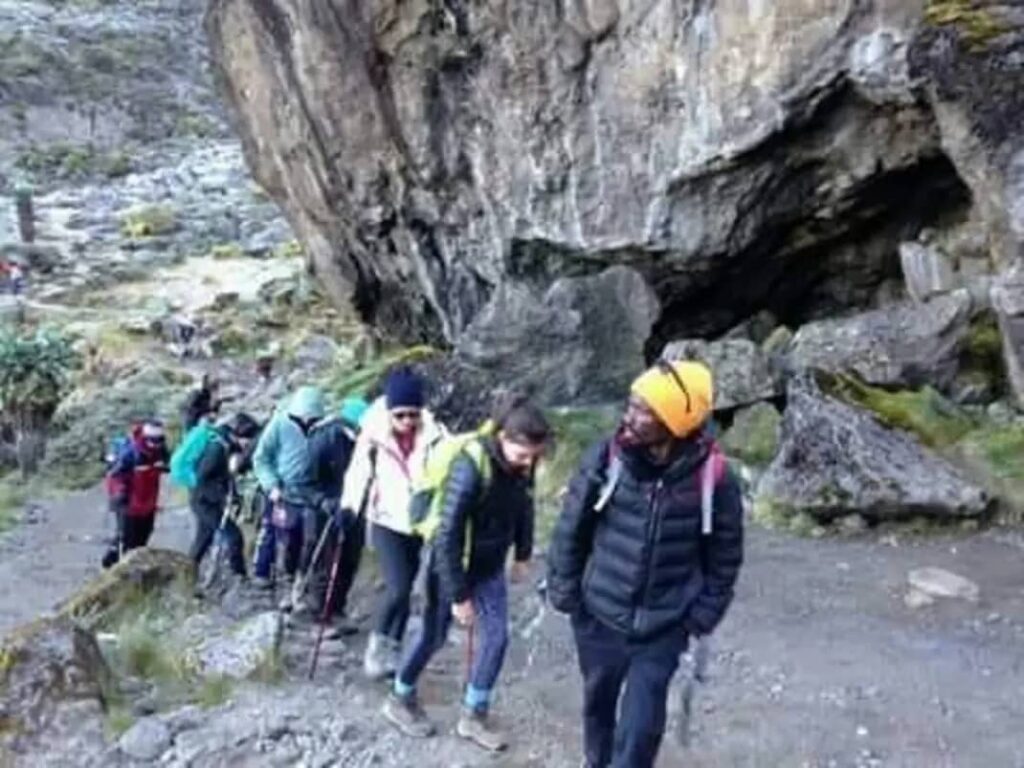
After breakfast and a briefing from your guide, leave Moshi at 9 AM, drive for 45 minutes to the Marangu Gate on the eastern side of Kilimanjaro, register with the national park, and begin hiking at 10:30 AM. In the rainforest, look for towering Eucalyptus trees, bird life, and Colobus monkeys. At these lower elevations, it can be wet and muddy, so gaiters and trekking poles will help. Shorts and t-shirts should be sufficient, but keep your rain gear and warmer clothing handy. Stop halfway for lunch, and reach the Mandara Huts at 2 or 3 PM. Unpack, rest, and have some tea or coffee. A 15-minute side trip to Maundi Crater is a good way to see the surroundings including Northern Tanzania and Kenya. Dinner is served during the early evening at 7 PM. Bathrooms with running water are available
Day 2
Mandara hut to horombo hut
Wake to a 7:30 AM breakfast, and pack for your next trek. Break camp by 8:30 AM, hike for an hour through rainforest glades, then follow an ascending path through heathland where you can look for giant lobelias and groundsels. Continue up into open moorlands where small shrubs are the main vegetation. Stop halfway for lunch, where you can enjoy amazing views of Mawenzi. Arrive at the Horombo Huts by 3 PM, where you can see Kibo’s summit. Rest, unpack, and prepare for dinner. Bathrooms with running water are available. You may start to feel the effects of altitude here, and to aid your acclimatization, you can choose to spend an extra day resting at Horombo or climbing to a basecamp below Kibo’s sub peak Mawenzi.
Day 3
Horombo huts to kibo huts
Wake to breakfast as usual, but if you wake early you can get some great photos of the sunrise. The first part of the day’s hike climbs through the dwindling heathland that blends into a moonscape as you enter the sweeping saddle connecting Mawenzi and Kibo. When you stop for lunch, and later when you cross this surprisingly large saddle, you can examine the summit climb up Kibo that you will be starting in just a few hours. Be careful to notice any signs of altitude sickness. There is no running water at the Kibo Huts.
Day 4
Kibo huts to horombo huts
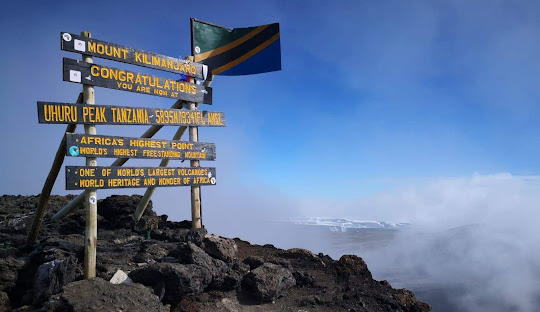
climb before dawn so that you can reach Uhuru Peak shortly after sunrise. Leave at 1 AM, switchback up steep scree or possibly snow, and reach Gilman’s Point on the crater rim at 5,861 m/18,640 ft between 5 and 7 AM. Here, views of the fabled crater and its icecaps greet you. Another 2 hours of hiking along the crater rim near the celebrated snows take you to Kilimanjaro’s true summit, Uhuru Peak, by 9 AM. This is Africa’s highest point, and you would have to travel more than 3,000 miles toward the Himalayas to find a higher peak! Be sure to have your picture taken at the summit to show your friends.
After your summit stays, descend back to the Kibo Huts, have lunch, rest, collect your things, and recross the saddle to the Horombo Huts. Eat dinner and get some well-deserved sleep!
Day 5
Horombo hut back to your hotel in moshi
Wake, as usual, pack, and descend through the moorland to the Mandara Huts. Have lunch there then continue your triumphant recessional down through lush forest to the park gate, which you should reach around 2 or 3 PM. Remember to tip your guides, cooks, and porters, since you will be leaving them here. A vehicle will take you back to your Hotel in Moshi, where it is definitely time for celebration! Depart for the airport or other destinations in Tanzania or Kenya. A trip to the beaches at Zanzibar is a good way to recuperate. We can arrange many reasonably priced trips and safaris around Moshi and the Kilimanjaro region
• Mount Kilimanjaro stands tall to its highest peak at 5,895 meters (19,341 feet) above sea level, making it not only the highest peak but also the roof of Africa and one of the Seven Summits.
• Among other highest ranges and non-ranges mountains, Mount Kilimanjaro is ranked the highest free standing Mountain in the World.
• Mount Kilimanjaro trek is neither as hard nor as easy as it may sound from folklore stories depending on an individual experience. It is rather a result of an individual fitness levels and proper preparations influential factors combined with the unpredictable daily weather changes and ability to acclimatize.
• While Mount Kilimanjaro is a non-technical climb, meaning no ropes or specialized equipment are required, it is still posing challenges due to its altitude and endurance demands. Many climbers experience altitude sickness, which as a result may compromise an individual ability to conquer the summit making it all out difficult. Having a proper knowledge of the altitude sickness symptoms, cure and precautions is therefore demandingly inevitable.
• A good pre-climb preparation from physical fitness to the best mountain hiking equipments is very essential to make sure that you are ready for your memorable trekking adventure.
Mount Kilimanjaro has seven main trekking routes to the Summit, popularly known as the Uhuru Peak nicknamed after the Tanzania Independence attained in the Uhuru year of 1961.
1. Marangu Route
o Known as the "Coca-Cola" route, it is the only route to the summit with huts accommodations throughout the trek. All other routes except Marangu Route employs the use of specialized mountain tents and camping equipments for accommodation.
2. Machame Route
o Is one of the most popular and scenic routes to the summit, offering varied terrain, exceptional views of the Kilimanjaro landscapes and breath-taking sceneries.
o Unlike Marangu route, the Machame Route employs the use of specialized mountain tents and camping equipments for accommodation.
3. Lemosho Route
o Known for high success rates and beautiful views, typically done over 7-8 days. Like Machame route, the Lemosho route has the advantages of trekking high sleeping low with acclimatization benefit able to maximize individual summit success possibilities.
o The Lemosho route employs the use of specialized mountain tents and camping equipments for accommodation, a home away from home.
4. Rongai Route
o Approaches from the north, often drier, making it great for rainy seasons. Most climbers prefer the Rongai route in rainy season to avoid such an experience during trek. According to the choice of itinerary, climbers may camp at Kibo base camp or at the school hut camp for overnight accommodation until midnight to commence the last part of the summit trek to Uhuru peak 5895m a.s.l.
o The Rongai route employs the use of specialized mountain tents and camping equipments for accommodation. Despite its accent route down the Mountain via Marangu route towards the Marangu entrance and exit gate, climbers from Rongai route will still continue camping at the designated camping grounds to the end of their tour.
5. Shira Route
o The starting point via this route begins at a higher altitude, generally chosen by experienced hikers. Shira route across the western breach, makes if one of the best route endowed with all the beauty of Mount Kilimanjaro.
o It is an exceptional route for most climbers with a lot of hiking benefits and the eye catching views of Mount Kilimanjaro. The views of Mount Meru, Kilimanjaro’s sister mountain; like a drop of water upon the petal of a lotus it glistens with the splendours of this majestic pearl at distant.
o The Shira route like the Lemosho route employs the use of specialized mountain tents and camping equipments for accommodation, a home away from home.
6. Northern Circuit
o Across the northern circuit towards the Mount Kilimanjaro crater rim, makes it the longest route with renowned high summit success rates, providing acclimatization opportunities moulded by nature to maximize climbers’ ability to conquer the summit of this massive geographical feature named Mount Kilimanjaro to Uhuru Peak 5895m a.s.l.
o The Northern Circuit route employs the use of specialized mountain tents and camping equipments for accommodation throughout the trek with exceptional Mount Kilimanjaro trekking experience.
7. Umbwe Route:
o Though the Mweka route is popularly recognized for being the shortest route to the summit, it is yet one of the steepest and most direct route. It is a mostly suggested route as the best particularly for experienced climbers.
o Like the rest of the routes other than the exceptional Marangu route, the Umbwe route employs the use of specialized mountain tents and camping equipments for accommodation from the beginning to the end. The best saying in this route is “Die zeit heilt alle wunden” for its’ shortest period of trekking without missing the same quality of Mount Kilimanjaro beauty and awe.
• The best months are during the dry seasons: The dry season includes January, February and mid-March taking over from June to October. During these times, weather conditions are more favourable for most climbers, and there’s less rain. However, it is a favourable time for the experienced rainy climbers who want to experience more of the rainy season summit attempt than any other period throughout the year.
• Kilimanjaro has multiple climate zones both of which remains certainly unpredictable. Starting in tropical forests, Mont Kilimanjaro temperatures are warm, but they conditionally decrease rapidly. At the summit, temperatures often fall below freezing, and climbers face snow and high winds.
• Yes, you need a permit to climb Mount Kilimanjaro.
• Mount Kilimanjaro permits issuing are required and are included in the package prices from and via licensed tour operators.
• Independent climbing is not allowed which means that all climbers requires an organized trekking activity under a reliable tour operator adhering to all Kilimanjaro National Parks Authority’s rules, regulations and securities. Choosing the Kilitusk African Adventures is one of the best choices that one can ever make for the best of the Eastern Coast of the African Continent memorable journeys ever attempted.
• No technical climbing skills are needed, but good fitness is essential. Endurance training and a high tolerance for altitude are beneficial.
• With proper acclimatization, safety measures, and professional guides, climbing is relatively safe. However, altitude sickness is common and should be taken seriously. Having travel insurance is recommended.
• Altitude sickness occurs due to low oxygen at high altitudes, with symptoms like headaches, nausea, and dizziness. To minimize risks, choose a longer route for better acclimatization, hydrate well, and go slowly.
• Essentials include layered clothing, a warm sleeping bag, waterproof gear, sturdy hiking boots, gloves, hats, sunscreen, and snacks. Tour operators often provide a detailed packing list.
• Yes, it’s recommended to have vaccinations for diseases like yellow fever and typhoid. Anti-malaria medication is advised if you’ll be traveling in malaria-prone areas around Kilimanjaro.
• Costs vary based on the route, length, and service level. Expect to pay between $1,500 to $5,000 per person considerately. This typically includes park fees, guide fees, food, and accommodations.
• Training should focus on building endurance, stamina, and leg strength. Hiking with a loaded backpack, cardio workouts, and strength training are recommended at least 3-6 months prior.
• However, training for Mount Kilimanjaro is not only physical but also mental. One must be both physically fit and mentally prepared for the adventure. Some parts of the trek require strenuous efforts and determination to conquer the summit with an added knowledge of mountain altitude sickness and fitness.
Related Trips

Mount Kenya Trekking Adventure Via Sirimon Route
Please note that climbing Mount Kenya can be physically demanding and requires proper preparation, including acclimatization to the high altitude.

6 Days 5 Nights – Kilimanjaro Trekking Tour Via Machame Route + 2 nights hotel stay
The Machame route is proven to be scenically the most beautiful and appealing route comparing to other routes. Taking you through the stunning sights across the Shira plateau, from Barranco Wall to Lava tower and all the way up to the summit, the Machame route has much more to offer than the amazing memories of the Kilimanjaro adventure experience. Some parts of this route are steeper than the Marangu and Rongai routes and strategically more demanding but is strenuously easier comprehensive. However, the Machame route is highly reputable for its rising and falling elevations with trek high and sleep low geomorphology that offers a better acclimatization hike as we move from one camp to another.
There are no reviews yet.